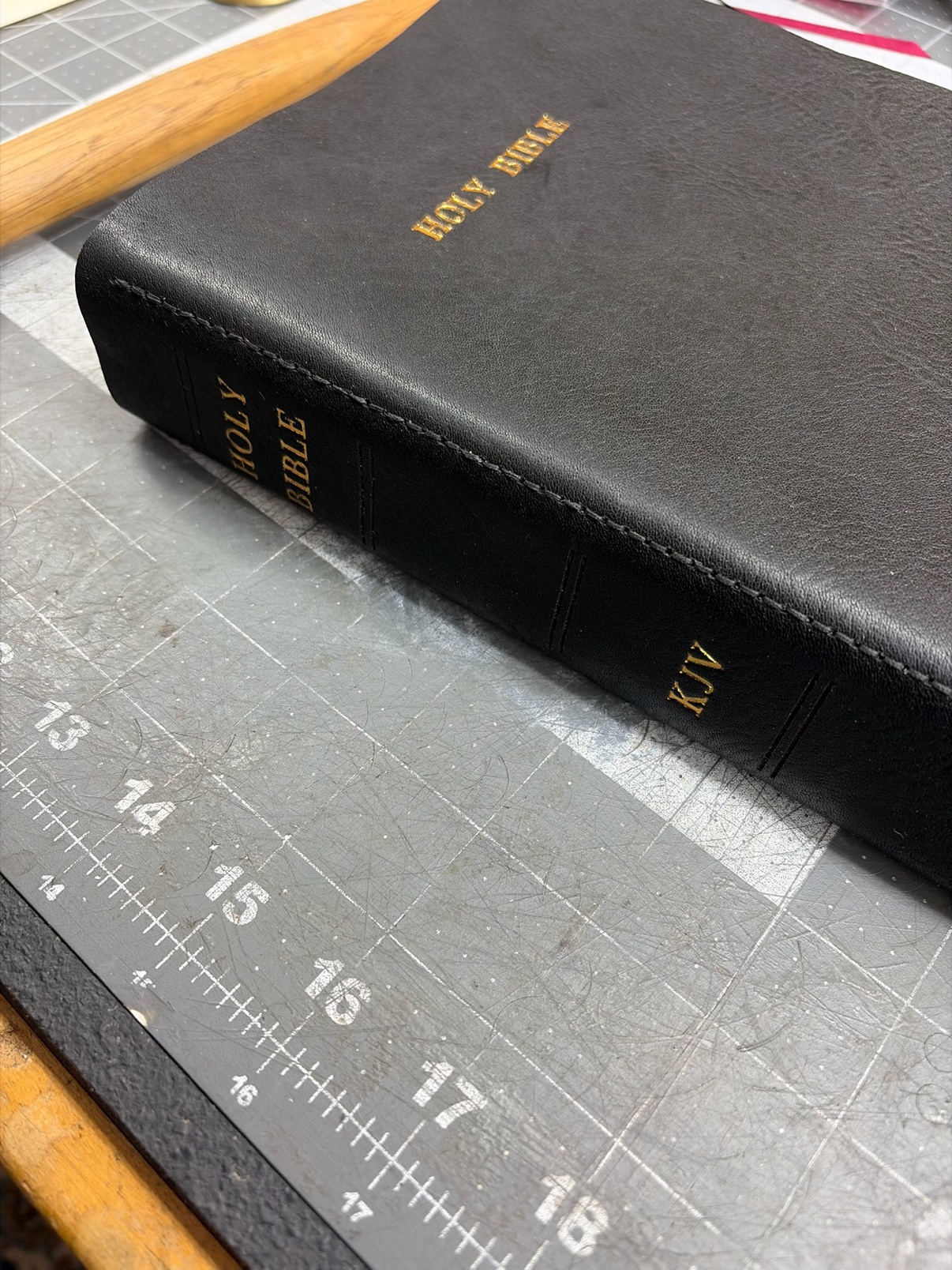
Our Story
A working bench, honest materials, and careful hands.
The vintage tools and worn surfaces are not decoration. They are where the fitting, cutting, tooling, stitching, and finishing happen.
Why I do this
To get Bibles back into people’s hands.
There’s a sound I love in church: the pastor names a verse, and a hundred pages turn at once. A Bible in someone’s hands is intentional. When a person is looking down into their Bible, you know exactly what they’re doing.
What I can’t stand is a Bible full of notes and memories sitting on a shelf because it’s falling apart, while its owner makes do with a phone instead. That Bible has their life in it. My work is putting it back together — sound and strong, ready to be carried and used again.
And there’s the joy of it: a grandmother’s Bible, coming apart at the seams, whole again in her family’s hands — fit to be handed down for generations. To read your ancestors’ faith in their own handwriting, in the margins where they wrote it, is something very special.
It’s tedious work. I enjoy it. The craftsmanship of it has always resonated with me.
— Brandon Yancey
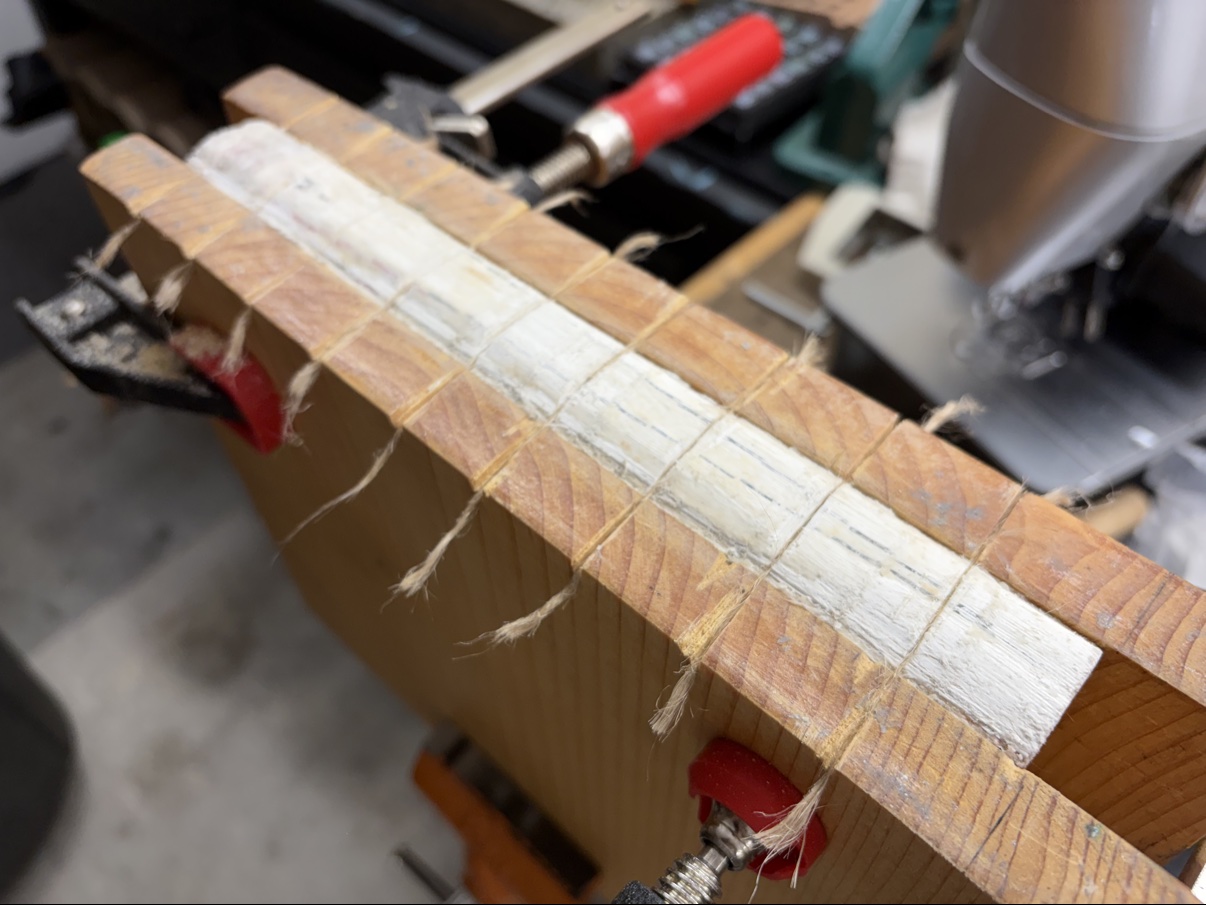
The workshop
One project at a time.
Every Bible arrives with its own condition and history. That is why every project starts with you telling me about your Bible.
Signs of the work
The small details carry the whole piece.
Stitching, edges, spine reinforcement, endsheets, and ribbons are part of every rebind — not extras.